For better or worse, I’m heavily invested in the unstable, often controversial relationship between science and the humanities. I often don’t know where it will lead me next. In this case, it led me through Wendell Berry’s essay “against modern superstition”- Life is a Miracle. Recommended by one of my biology professors, it is framed as a response to E.O. Wilson’s semi-famous Consilience. I have read very little of E.O. Wilson, his Consilience, and his theories on sociobiology and secular humanism, but Berry’s analysis is framed as a standalone sort of thing so I decided to take it on.
Showing posts with label Science. Show all posts
Wednesday, May 25, 2011
Saturday, April 16, 2011
Playing Games for Science
You don’t need a degree to contribute to cutting edge scientific research on proteins. As it turns out, all you need is your ability to solve puzzles more intuitively than a computer can. Despite recent media fuss over supercomputers like Watson, which have the ability to answer complex questions, the human mind still has an edge when it comes to efficiently recognizing and sorting out visual problems.
Sorry, Watson. Can we still be friends?
Sunday, April 10, 2011
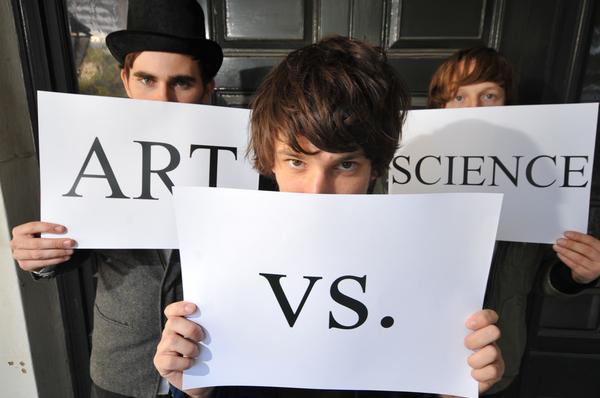
Antonyms.
Hello again. A lot of good things have been happening lately, but today I want to talk about art and science.
Tuesday, March 22, 2011
Thoughts on my biology degree, at 11:40 PM.
You've probably gathered by now that I like science. I like it a lot. But when I inform inquiring minds that I am a biology major, I'm inevitably answered with, "Oh! So you're looking at med school, then?"
No, I'm not, actually.
Cue the soft, condolatory murmurs, understanding flash of the eyes, and brief train of apologetic phrases. "Hey, that's too bad."
I can't, for the life of me, understand why I'm so often met with the same response that I would offer to a friend whose last bit of change was just eaten by the vending machine.
I want to dive into a research lab, ask questions and maybe find some answers. It's not a graceful acquiescence to a machine that ate all my pre-med coins only to taunt me with a degree still clinging to its inner workings. No. I pressed that button, and I saved all the coins for it too.
And if I so much as think of mentioning that whole, "science writing" thing, I'm met with an even more noticeable lowering of the gaze. What's there to do with that?
I have respect for the crowd of future doctors out there, tremendous respect. Taking all the P. Chem classes, and for what? To help people. In fact, that's one of the reasons your occupation garners such admiration. There is tangible proof of the merit of your hard work in every remission, prescription, and diagnosis that passes through your office. We value life and quality of life, and your direct connection to its improvement on an individual level elevates you to prestige.
Researchers and scientific journalists don't have quite so concrete a foundation on which to build their satisfaction. A nicely written article may be poignant, but what way is there to gauge its effect, its long-term value? What happens to the researcher who works beneath a cloud of near-anonymity for his whole career, quietly sorting out small truths through meticulous trials that may or may not yield the results for which he had hoped? We know of the Watson and Crick's, the Mendel's, Darwin's and Morgan's. Still, there are many scientists doing really important things that we'll never hear about. The truth is, it takes many of us working together and apart to strike at something that will improve the quality of life for everyone.
The importance of any single research effort can be lost, but only in the sense that you're looking at a microscopic portion of something entirely too big for confinement. These people have devoted themselves to the beauty of that idea in full view. If Bob becomes well because a doctor prescribed him a medicine, he looks at the top line of script and knows to thank John Doe, M.D. Beneath his name, however, is an implied list of thousands more who helped both Bob and John get to where they are -the men and women who collectivized symptoms, identified the ailment, developed the drug, created methods for testing it, wrote about it, argued against it, and refined the process for the next time. That applies to every branch of science outside the realm of medicine as well. Botanists and soil scientists are working on improving fertilizers and plant health. Evolutionary biologists are trying to tease out the formation of species and the fascinating paths evolution leads them to take. Science writers are bringing critical questions to the forefront of a society that doesn't always see their worth at first glance (hence the topic at hand). But they aren't doing it individually. Why?
Because they shouldn't be. Science is a field of collaboration. It's the only way it will work. So, I'm sorry if the field is so broad that individual occupations slated under the headline, "Research, Lab Work" don't incite feelings of excitement and esteem in your mind. I'm even more sorry if you see a biology degree as a means to an exclusive, medical end and a deviation from that end as a failure or a sort of lost opportunity.
I, for one, can't wait to be a part of it.
Thursday, February 3, 2011
Nabokov's Butterflies.
Things come together, as always. This week, we'll throw bioinformatics, Russian literature, and butterflies into the stew. You're skeptical, I know, but it will taste delicious.
Monday, December 27, 2010
The Looking Glass.
I’ve lived many of my most exciting moments from behind a piece of glass. I started with a camera. My favorite initial subjects were those that did not move, those whose patience with my fumbling inexperience were naturally limitless. Early on, I developed a great appreciation for flowers and leaves for their photogenic symmetry, color, and, of course, their stillness. I eventually progressed to other subjects. But like an old friend, those first photos remained fond in my memory until I found myself, again, fascinated with what lay behind a glass barrier in my first biology class.
I remember that blue cobblestone pattern (onion cells), remember hearing my teacher's voice without looking up. It was saying something about form and function. I decided then that I would learn more about the interplay between the structure I was looking at and the the functions I couldn't observe in a slide. I spent the rest of the afternoon flipping through pages that described the evolutionary modifications of various plant life –orchids that fooled pollinating bees by mimicking a mate, acacia trees that hosted armies of ants as a means of defense, plants that produced deadly toxins and others that created slow-acting tannins.
To say that I was merely surprised would be an understatement. Plants had seemed relatively uncomplicated through a camera lens. As a photographer, I'd counted them as simpler subjects than most other things: beginner's stuff before tackling people and places. But that was before I started learning about their pathology. I became captivated by the clever practicality of the kingdom Plantae.
Since then, I have enjoyed my venture into botany. Right now, I want to learn more about the global health of agricultural systems- the mechanism of botanical virus transmission, the effective use of fertilizers, and the sustainability and improvement of crops in largely impoverished regions. I'll be applying to internships along with generally reading, writing, and breathing science (wafting, in accordance with proper technique). You'd think that my approach is awfully limiting. Those scientists- even with one eye free from the microscope, they can't see more than a few feet in front of their own ideas. But that's exactly the approach, or stereotype, that I'd like to sidestep. There will be experimental data and precise jargon, but there will also be writing, ethics, and art. I'm putting the life back in the life sciences, just you wait and see.
Now Playing:
Bridges and Balloons (Live) - Joanna Newsom
Thursday, October 28, 2010
"If you wish to make an apple pie from scratch, you must first invent the universe. "
This is a really excellent set of guidelines on writing technically.
I think it really highlights the importance of writing for an audience rather than yourself. I mean, you (presumably) already understand what you're describing. Share the love. Consider the reader's interests more than your own.
Carl Sagan says, "It's not all about you."
By the way, have you all seen this? The Carl Sagan one is also excellent.
The Role of Consent in Genetic Research.
Today, I had to give a miniature presentation and lead a discussion about a topic in genetics.
I chose to explore an article that I remember reading in the NYT earlier this year. The piece concerns a lawsuit brought by the Havasupai tribe of the Grand Canyon against Arizona State University over issues of consent. The university collected tribe members' DNA samples under the premise of trying to trace a devastatingly high incidence of diabetes among the Havasupai. Researchers eventually ended up using the blood samples, a sacred symbol to the tribe, in other scientific endeavors including studies of mental illness, geographic origin of the Indians, and inbreeding.
The Havasupai found a lot of these results to be culturally offensive. For instance, traditional Havasupai folklore holds that the group originated in the Grand Canyon, while a study suggested a migration from Asia. No member of the tribe was ever informed of the other uses of the blood samples, and ASU is now paying a $700,000 settlement and returning the samples as compensation.
We discussed whether it should be the responsibility of the researcher to inform potential DNA donors of all planned uses of DNA and to seek explicit permission before continuing. Some believed that the medical benefits can justify similar situations, while others believed that the geneticists in this case were in the wrong.
All this reminded me of an older, but more famous case- that of Henrietta Lacks. I talked about how her uninformed contribution to science in the form of immortal cancerous cervical cells has propelled generations of medical breakthroughs, ranging from the polio vaccine to space research, chemotherapy, cloning, in vitro fertilization, and the entire field of virology.
In the case of the HeLa cell line, the benefits are quite clear. But what of the ethics of taking advantage of a minority- an African American woman of the mid-twentieth century? I noted parallels between her family's eventual confused understanding of what had happened without their knowledge and the general misunderstanding between the Havasupai tribe and ASU researchers. A journalist, Rebecca Skloot, explains the family's reaction:
Some students brushed off the ethical implications of both the Henrietta Lacks and the Havasupai tribe case, but I think that it hints at a deeper need for better communicative bridges between science and the rest of us. I'd like to elaborate more on this topic, but schoolwork awaits.
Also, science writing, here I come.
I chose to explore an article that I remember reading in the NYT earlier this year. The piece concerns a lawsuit brought by the Havasupai tribe of the Grand Canyon against Arizona State University over issues of consent. The university collected tribe members' DNA samples under the premise of trying to trace a devastatingly high incidence of diabetes among the Havasupai. Researchers eventually ended up using the blood samples, a sacred symbol to the tribe, in other scientific endeavors including studies of mental illness, geographic origin of the Indians, and inbreeding.
The Havasupai found a lot of these results to be culturally offensive. For instance, traditional Havasupai folklore holds that the group originated in the Grand Canyon, while a study suggested a migration from Asia. No member of the tribe was ever informed of the other uses of the blood samples, and ASU is now paying a $700,000 settlement and returning the samples as compensation.
Havasupai Indians pray over the sacred, remaining blood samples of deceased relatives.
We discussed whether it should be the responsibility of the researcher to inform potential DNA donors of all planned uses of DNA and to seek explicit permission before continuing. Some believed that the medical benefits can justify similar situations, while others believed that the geneticists in this case were in the wrong.
All this reminded me of an older, but more famous case- that of Henrietta Lacks. I talked about how her uninformed contribution to science in the form of immortal cancerous cervical cells has propelled generations of medical breakthroughs, ranging from the polio vaccine to space research, chemotherapy, cloning, in vitro fertilization, and the entire field of virology.
Henrietta Lacks.
In the case of the HeLa cell line, the benefits are quite clear. But what of the ethics of taking advantage of a minority- an African American woman of the mid-twentieth century? I noted parallels between her family's eventual confused understanding of what had happened without their knowledge and the general misunderstanding between the Havasupai tribe and ASU researchers. A journalist, Rebecca Skloot, explains the family's reaction:
So, when Mr. Lacks was finally informed of this overwhelming information, there was no proper delicacy in the development of communication between the scientist and the family. Should it not be the moral responsibility of the scientist (both parties, really) to ensure an adequate, accurate level of communication between science and those it affects, regardless of how difficult this may be at first attempt?So a postdoc called Henrietta’s husband one day. But he had a third-grade education and didn’t even know what a cell was. The way he understood the phone call was: “We’ve got your wife. She’s alive in a laboratory. We’ve been doing research on her for the last 25 years. And now we have to test your kids to see if they have cancer.” Which wasn’t what the researcher said at all. The scientists didn’t know that the family didn’t understand. From that point on, though, the family got sucked into this world of research they didn’t understand, and the cells, in a sense, took over their lives.
The HeLa Line of cells.
Some students brushed off the ethical implications of both the Henrietta Lacks and the Havasupai tribe case, but I think that it hints at a deeper need for better communicative bridges between science and the rest of us. I'd like to elaborate more on this topic, but schoolwork awaits.
Also, science writing, here I come.
Subscribe to:
Posts (Atom)